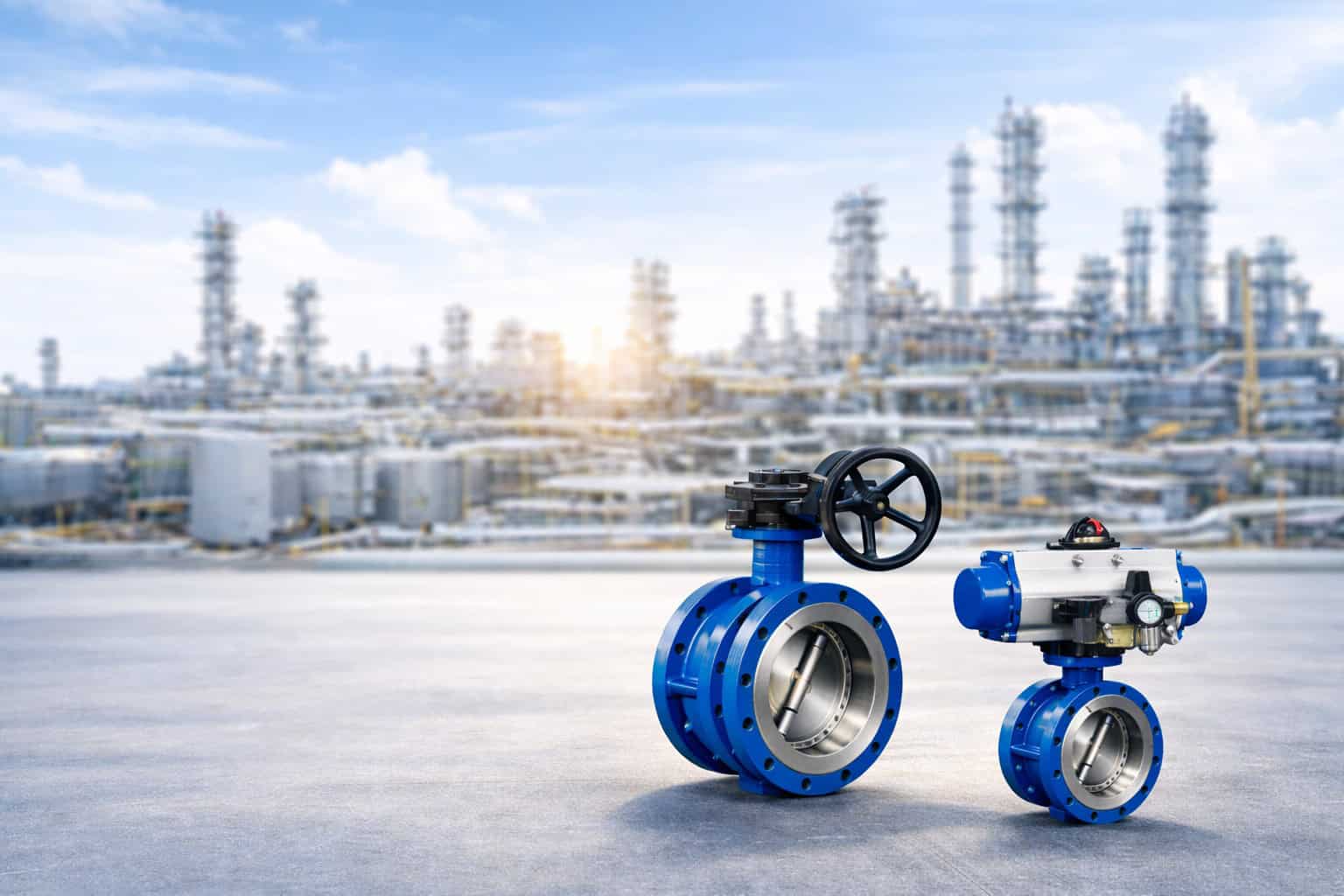

Electric Valve Actuators: A Complete Industrial Guide
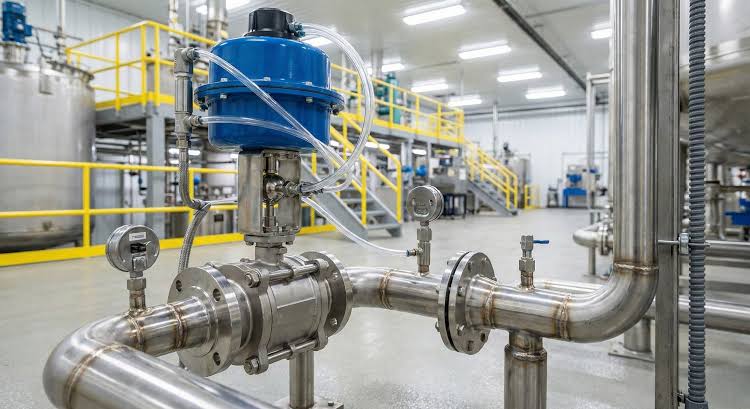
- Valve
- Oct 21, 2026
- 14 Views
Electric Valve Actuators: A Complete Industrial Guide
Industrial processes depend on reliable systems to control the movement of liquids, gases, steam, and other materials through pipelines. Valves play a critical role in regulating flow, maintaining pressure, and isolating equipment during maintenance. However, operating valves manually can become difficult in large industrial facilities, especially when valves are installed in remote locations or must be controlled frequently. This is where electric actuators offer a practical solution.
Electric Valve Actuators are devices designed to operate valves using electrical power instead of manual effort. They convert electrical energy into mechanical movement, allowing valves to open, close, or move to a specific position. These actuators are widely used in water treatment plants, power generation facilities, chemical processing units, manufacturing industries, and building automation systems. Their ability to support automated operation, accurate positioning, and remote control makes them an important component of modern industrial flow management.
What Are Electric Valve Actuators?
An electric valve actuator is a mechanical device that uses an electric motor to control the operation of a valve. Depending on the valve design and application, the actuator produces rotary or linear movement to change the valve's position. This movement controls how much fluid passes through a pipeline or completely stops the flow when required.
An actuator generally includes an electric motor, a gearbox, a control mechanism, position feedback components, and a housing. The motor generates movement, while the gearbox adjusts torque and speed to match the valve's operating requirements. Control electronics receive commands from an operator, programmable logic controller, or distributed control system.
These devices are available in different sizes and configurations to suit various industrial applications. Some are designed for simple open-and-close operations, while others provide precise positioning for continuous flow regulation. Selecting the right actuator depends on valve type, operating conditions, required torque, control requirements, and environmental exposure.
How Do Electric Valve Actuators Work?
The operating principle of an electric actuator is based on converting electrical energy into mechanical motion. When the actuator receives an electrical command, its motor starts rotating. The gearbox transfers this motion to the valve stem or shaft, causing the valve to change position.
For an on-off application, the actuator moves the valve to its fully open or fully closed position. Limit switches, position sensors, or electronic controls help identify the required stopping point. In modulating applications, the actuator adjusts the valve to intermediate positions according to a control signal, allowing the system to regulate flow more accurately.
Modern actuators can also communicate with automated control systems. For example, a temperature controller may send a signal to adjust a cooling-water valve when equipment temperature rises. The actuator responds by moving the valve to the required position. This automated process reduces manual intervention and helps maintain consistent operating conditions.
Types of Electric Valve Actuators
Different industrial applications require different types of actuators. Understanding their operating mechanisms helps engineers choose equipment that matches the valve design and process requirements.
1. On-Off Electric Actuators
On-off actuators are designed to move a valve between two primary positions: fully open and fully closed. They are commonly used in pipeline isolation, water distribution, equipment shutdown, and basic process automation.
These actuators are suitable when continuous flow adjustment is unnecessary. Their straightforward operation makes them relatively simple to integrate into control systems. Depending on the design, they may include limit switches, manual overrides, and status indicators to support safe and convenient operation.
2. Modulating Electric Actuators
Modulating actuators provide more precise control by positioning a valve at intermediate points between fully open and fully closed. They may use control signals such as 4–20 mA or 0–10 V, depending on the actuator and control-system configuration.
These devices are useful in heating, ventilation, air conditioning, chemical processing, and temperature-control applications. By continuously adjusting valve position, they help maintain desired flow rates, pressure levels, and process temperatures. Correct configuration and feedback calibration are important for achieving reliable control performance.
3. Multi-Turn Electric Actuators
Multi-turn actuators produce several rotations to operate valves that require repeated stem movement. They are commonly associated with gate valves, globe valves, and certain other valve designs.
These actuators are suitable for applications where valve operation requires multiple turns and substantial mechanical force. Their torque and travel settings must be matched to the valve manufacturer's specifications to prevent damage to the stem, seating surfaces, or actuator gearbox.
4. Part-Turn Electric Actuators
Part-turn actuators typically rotate a valve shaft through a limited angle, commonly 90 degrees. They are frequently used with butterfly valves and ball valves.
Their compact design and relatively quick operation make them useful in industrial pipelines, water treatment systems, and general flow-control installations. The required output torque depends on valve size, pressure conditions, fluid properties, and the valve's operating characteristics.
5. Linear Electric Actuators
Linear actuators create straight-line movement rather than rotational movement. They are used with valves and other equipment that require a pushing or pulling action.
These actuators are often found in specialized control valves and applications where precise linear positioning is necessary. Stroke length, thrust capacity, positioning accuracy, and mounting compatibility are important factors when selecting a suitable model.
Key Components of an Electric Actuator
Understanding the major components helps operators and maintenance teams identify possible problems and maintain reliable performance.
Electric motor: Converts electrical energy into rotational movement.
Gearbox: Adjusts motor speed and increases usable output torque.
Control unit: Processes operating commands and manages actuator movement.
Position sensor: Identifies the valve's current position.
Limit switches: Help stop movement at predefined travel limits.
Torque protection: Helps prevent excessive operating force where this feature is provided.
Manual override: Allows authorized operators to operate the valve manually on equipped models.
Housing and seals: Protect internal components from environmental conditions.
Feedback system: Communicates valve position or operating status to the control system.
The exact components vary according to actuator design, performance requirements, and manufacturer specifications.
Benefits of Electric Valve Actuators
Electric actuation offers several advantages for industrial facilities seeking dependable flow control and improved process automation.
Improved Automation
Electric actuators can be connected to programmable logic controllers, supervisory control systems, and other automation equipment. This allows operators to manage valves from a central control room without visiting each installation point.
Automation is especially useful in large plants with multiple pipelines, restricted-access areas, or repetitive valve operations. It can also help coordinate different stages of a production process.
Accurate Valve Positioning
Modulating actuators can position valves according to specified control signals. This supports more consistent regulation of flow, pressure, and temperature when the actuator, valve, and control system are correctly sized and configured.
Accurate positioning is particularly important in applications where small changes in valve opening can significantly influence process conditions.
Reduced Manual Effort
Manual valve operation can be time-consuming and physically demanding, particularly for large valves or installations requiring frequent adjustments. Electric actuation reduces the need for routine manual operation and can improve accessibility for operators.
It also makes it easier to manage valves installed at elevated locations or within complex industrial layouts.
Integration with Digital Systems
Many modern actuators offer digital communication, diagnostic information, and position feedback. These capabilities help operators monitor valve performance and identify abnormal operating conditions.
Depending on the model, integration may include industrial communication protocols and remote status monitoring. Compatibility should always be verified before purchasing equipment.
Consistent Operation
Automated actuation provides repeatable operating commands and can reduce inconsistencies associated with manual operation. When combined with appropriate controls and maintenance, it supports stable industrial processes and more predictable valve performance.
Applications Across Different Industries
Electric actuators are used across many sectors because they can be configured for a wide range of valve types and operating environments.
Industry | Common Applications | Main Advantage |
|---|---|---|
Water treatment | Flow regulation and pipeline isolation | Automated water distribution |
Power generation | Cooling-water and auxiliary systems | Reliable process control |
Chemical processing | Fluid handling and dosing systems | Controlled valve positioning |
Oil and gas | Selected pipeline and utility services | Remote operation where suitable |
Food and beverage | Process-water and utility lines | Repeatable operation |
HVAC | Chilled-water and heating circuits | Temperature regulation |
Manufacturing | Equipment utilities and production lines | Improved automation |
Pharmaceutical | Process utilities and selected fluid systems | Controlled operation and monitoring |
The actuator must be selected according to the actual process conditions. Applications involving hazardous areas, corrosive chemicals, high temperatures, or strict hygiene requirements may require specialized equipment and additional certification.
Electric Actuators Compared with Pneumatic Actuators
Electric and pneumatic actuators both provide automated valve operation, but they use different energy sources and have different operating characteristics.
Electric actuators use an electric motor and gearbox to move the valve. They are often suitable where electrical power, precise positioning, and digital integration are readily available. They may also be attractive where a compressed-air network is unavailable.
Pneumatic actuators use compressed air to produce movement. They are often selected for fast cycling, demanding industrial environments, and applications where a suitable instrument-air supply is already available. Depending on their configuration, pneumatic systems can also provide spring-return action.
The choice depends on operating speed, available utilities, required fail-safe behavior, maintenance capabilities, environmental conditions, and total lifecycle cost. Neither technology is universally better for every application.
Comparison of Common Actuator Types
Feature | On-Off | Modulating | Multi-Turn | Part-Turn |
|---|---|---|---|---|
Primary function | Open or close | Adjust position | Multiple rotations | Limited-angle rotation |
Typical control | Discrete commands | Positioning signal | Discrete or position control | Discrete or position control |
Common valve use | Isolation valves | Control valves | Gate and globe valves | Ball and butterfly valves |
Key selection factor | Operating duty | Positioning accuracy | Torque and travel | Output torque and rotation angle |
Typical application | Pipeline isolation | Flow regulation | Multi-turn valve operation | Quarter-turn valve operation |
The table describes common arrangements. Actual capabilities depend on the specific actuator model and valve combination.
How to Select the Right Electric Valve Actuator
Choosing an appropriate actuator requires evaluating both the valve and the surrounding process. A product that works well in one installation may be unsuitable for another because of differences in pressure, temperature, torque, or environmental exposure.
Consider these important factors before making a selection:
Valve type: Identify whether the valve is a ball, butterfly, gate, globe, or another design.
Required torque or thrust: Confirm the force needed to operate the valve under the specified conditions.
Power supply: Check voltage, frequency, phase requirements, and electrical compatibility.
Control method: Determine whether simple on-off control or modulating operation is required.
Operating speed: Establish the acceptable opening and closing time.
Environmental protection: Assess moisture, dust, corrosion, temperature, and exposure to outdoor conditions.
Duty cycle: Determine how frequently the actuator will operate.
Fail-safe requirements: Establish what the valve should do during a power failure or control-system fault.
Mounting compatibility: Verify flange dimensions, shaft connections, and mounting standards.
Maintenance and support: Consider spare parts, diagnostics, service access, and manufacturer assistance.
It is also important to check applicable electrical and industrial standards. Hazardous-area installations require appropriately certified equipment, while critical safety functions may require a specifically engineered safety system rather than relying on a standard actuator alone.
Installation and Maintenance Best Practices
Correct installation plays an important role in actuator performance and service life. Before installation, technicians should confirm that the actuator is compatible with the valve and that the required torque, travel, mounting arrangement, and electrical supply match the equipment specifications.
The valve should be mechanically aligned to prevent unnecessary loads on the actuator shaft or gearbox. Electrical connections must follow the manufacturer's wiring diagrams, and suitable protection should be provided against electrical faults. Limit settings, position feedback, and control signals should be tested before the equipment enters normal service.
Routine maintenance should include visual inspections, checking mounting bolts, examining cable entries and seals, verifying position indication, and reviewing diagnostic alarms where available. Unusual noise, excessive vibration, overheating, inconsistent movement, or repeated torque trips may indicate a developing problem.
Maintenance intervals should reflect operating conditions and manufacturer recommendations. Before inspection or repair, equipment should be isolated from electrical power and the process system using the appropriate site safety procedures. Any manual override should be operated only according to the manufacturer's instructions.
Common Challenges and How to Address Them
Although electric actuation provides many benefits, performance issues can occur when equipment is incorrectly selected, installed, or maintained.
An actuator that cannot move a valve fully may have insufficient torque, incorrect limit settings, mechanical obstruction, or a valve experiencing higher resistance than expected. The solution is to investigate the cause rather than simply increasing torque settings without checking the manufacturer's limits.
Communication problems can occur when control signals, wiring, or configuration parameters are incompatible. Technicians should verify signal type, polarity where applicable, calibration, and controller settings. Unstable positioning may also result from poor feedback calibration or unsuitable control-loop tuning.
Environmental exposure can affect seals, electrical connections, and internal components. Selecting an appropriate enclosure rating and checking cable entries helps reduce these risks. A structured maintenance program and correct installation practices can prevent many common operating problems.
Future Trends in Electric Valve Actuation
Industrial automation is increasingly focused on data visibility, predictive maintenance, energy efficiency, and remote operation. Electric actuators are evolving to support these priorities through improved electronics, communication features, and diagnostic capabilities.
Smart actuator designs may provide information about operating cycles, motor conditions, valve position, torque trends, and fault events. When integrated with suitable monitoring platforms, this information can help maintenance teams recognize developing issues and plan service activities before a failure disrupts production.
Digital integration also supports centralized supervision of distributed equipment. However, advanced monitoring is useful only when the information is accurate, relevant, and properly interpreted. Cybersecurity, communication compatibility, and access control should be considered when actuators are connected to industrial networks.
Future developments are likely to focus on more efficient motors, improved diagnostics, better integration with industrial control platforms, and greater support for condition-based maintenance. These improvements can help facilities make informed maintenance decisions while maintaining dependable process operation.
Conclusion
Electric actuation has become an important part of modern industrial automation, providing controlled valve movement, remote operation, and opportunities for improved process efficiency. From simple pipeline isolation to precise flow regulation, the right actuator can support reliable operation across water treatment, manufacturing, power generation, chemical processing, and HVAC applications.
Selecting suitable Electric Valve Actuators requires careful consideration of valve design, torque requirements, electrical supply, control functions, operating conditions, and safety requirements. Proper installation, configuration, and preventive maintenance are equally important for achieving dependable performance.
Related Posts
- Oct 14, 2026
- SUDE
- 10
Process Control Valves: A Complete Guide to Industrial Flow Management
Explore More