
Butterfly Dampers for Power Plants: A Complete Guide to Reliable Air and Gas Flow Control
- Damper
- Sep 01, 2026
- 222 Views
Butterfly Dampers for Power Plants: A Complete Guide to Reliable Air and Gas Flow Control
Power plants operate under demanding conditions where every system must perform reliably. From combustion air and flue gas handling to boiler systems and exhaust processes, controlling the movement of air and gases is essential for efficient and safe operation.
This is where butterfly dampers for power plants play an important role.
Designed for controlling, isolating, or regulating gas and air flow, industrial butterfly dampers are widely used in thermal power generation and other high-temperature industrial processes. The right damper design can help improve process control, reduce energy losses, support safe shutdown procedures, and ensure reliable operation in demanding environments.
In this guide, we explore how butterfly dampers work, where they are used in power plants, and what to consider when selecting power plant dampers for high-temperature applications.
What Are Butterfly Dampers?
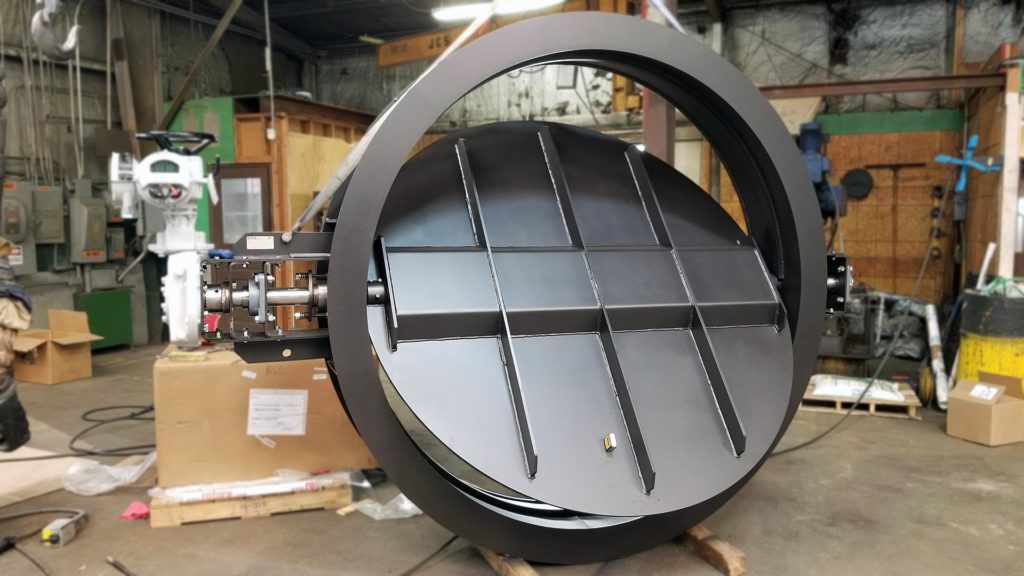
A butterfly damper is an industrial flow-control device used primarily to regulate or isolate the flow of gases, air, and other process media.
The damper typically consists of:
A circular or rectangular body
A rotating disc or blade
A shaft
Bearings and sealing arrangements
A manual, electric, pneumatic, or hydraulic actuator
When the disc rotates, it changes the available flow area.
The damper can be positioned to:
Allow maximum flow
Restrict the flow
Regulate flow at a required position
Shut off the flow path
Unlike conventional butterfly valves that are commonly associated with liquid applications, industrial butterfly dampers are often specifically engineered for large-volume air and gas handling systems.
Why Butterfly Dampers Are Important in Power Plants
A modern power plant handles large volumes of air and gases throughout its operation.
These may include:
Combustion air
Primary air
Secondary air
Flue gas
Exhaust gases
Process gases
Ventilation air
The flow of these media must often be controlled precisely.
A properly designed butterfly damper helps operators regulate these systems while maintaining reliable performance under changing operating conditions.
For example, power plant dampers can be used to control gas flow through ducts, isolate equipment during maintenance, or support the operation of fans and emission-control systems.
Applications of Butterfly Dampers in Power Plants
1. Boiler Air Systems
Boilers require controlled airflow for efficient combustion.
Butterfly dampers can be installed within air duct systems to regulate the movement of combustion air and support the overall combustion process.
Depending on the system design, dampers may be used for:
Air isolation
Air balancing
Flow regulation
Equipment isolation
Reliable airflow control is essential because changes in air supply can directly affect combustion efficiency and process stability.
2. Flue Gas Systems
After combustion, flue gases move through different sections of the power plant.
These gases may pass through equipment such as:
Boilers
Air preheaters
Dust collection systems
Pollution-control equipment
Fans
Stacks
Industrial butterfly dampers can be used to regulate or isolate these gas paths.
In large duct systems, the damper must be designed according to the operating temperature, gas characteristics, duct size, pressure conditions, and required leakage performance.
3. Fan Isolation Applications
Power plants use several types of fans, including forced-draft and induced-draft fans.
During maintenance or equipment shutdown, the flow path may need to be isolated.
Butterfly dampers can provide an effective solution for controlling airflow through these systems.
The actuator and damper design should be selected based on operating torque, differential pressure, frequency of operation, and required automation.
4. High-Temperature Gas Handling
One of the major challenges in power generation is temperature.
Standard flow-control equipment may not always be suitable for elevated-temperature environments.
High temperature dampers are designed with careful consideration of:
Thermal expansion
Material selection
Shaft design
Sealing requirements
Bearing arrangements
Structural stability
The damper should maintain reliable movement even when exposed to demanding thermal conditions.
This makes engineering and material selection particularly important for high-temperature power plant applications.
How Do Butterfly Dampers Work?
The operating principle is simple.
A disc mounted on a shaft rotates inside the damper body.
When the disc is aligned with the flow path, resistance is reduced and the system can allow a higher flow rate.
As the disc rotates, the flow area becomes restricted.
The damper can be controlled manually or through an actuator.
Common actuation options include:
Manual Operation
Suitable for applications where frequent automation is not required.
Electric Actuation
Electric actuators allow remote and automated damper operation.
They can be useful where integration with industrial control systems is required.
Pneumatic Actuation
Pneumatic actuators are suitable for applications where compressed air is available and rapid operation is important.
Hydraulic Actuation
Hydraulic systems may be selected for specialised applications requiring higher operating force.
The correct actuator should always be selected based on the actual torque and operating conditions of the damper.
What Makes a Butterfly Damper Suitable for Power Plants?
Not every industrial damper is designed for power generation.
Power plants may expose equipment to high temperatures, pressure variations, dust, vibration, and continuous operation.
Therefore, selecting the right damper requires more than simply matching the diameter or duct size.
1. Temperature Capability
Temperature is one of the most important selection factors.
High operating temperatures can affect:
Metal strength
Sealing materials
Shaft expansion
Bearing performance
Overall damper operation
A high-temperature damper should be engineered for the actual temperature range of the process.
2. Pressure Conditions
The damper must be capable of handling the differential pressure across the system.
Pressure conditions affect the torque required to operate the damper and can influence the structural design.
The manufacturer should understand the actual pressure conditions before selecting the damper and actuator.
3. Damper Size
Power plant duct systems can be large.
As damper dimensions increase, structural engineering becomes increasingly important.
Large dampers may require consideration of:
Disc stiffness
Shaft deflection
Structural supports
Multiple blades
Operating torque
Custom engineering can be particularly valuable for large industrial applications.
4. Leakage Requirements
Different applications have different leakage requirements.
Some systems require basic flow regulation, while others require more effective isolation.
The required leakage performance should be clearly defined during the engineering stage.
The sealing arrangement can be selected according to the specific application and process conditions.
5. Material Selection
The process media and temperature should determine the material requirements.
Important factors may include:
Corrosion
Abrasion
Temperature
Moisture
Gas composition
The wrong material selection can reduce service life and increase maintenance requirements.
Double Eccentric Butterfly Dampers for Industrial Applications
For demanding industrial environments, a more advanced design may be required.
A double eccentric butterfly damper uses an offset arrangement that can improve the movement of the disc and reduce contact during operation.
Depending on the application, this type of design can offer advantages in demanding flow-control conditions.
These dampers can be suitable for industries requiring:
Reliable industrial operation
Large air and gas flow handling
Automated control
High-temperature capability
Custom engineering
For more information about this category, explore SUDE Double Eccentric Butterfly Dampers.
Butterfly Dampers vs Other Power Plant Dampers
Different applications may require different damper designs.
Butterfly Dampers
Best suited for applications requiring a compact rotary design for controlling air and gas flow.
Multi-Louver Dampers
Use multiple blades and can be suitable for larger ducts and certain airflow-control requirements.
Guillotine Dampers
Primarily designed for isolation applications where a blade moves across the flow path.
Diverter Dampers
Used where the process flow needs to be directed between two or more paths.
The correct choice depends on the specific process requirement.
A good industrial damper manufacturer should evaluate the application rather than recommend the same product for every system.
Benefits of Industrial Butterfly Dampers
When properly designed for the application, industrial butterfly dampers offer several advantages.
Compact Design
The rotary design can provide an efficient solution for controlling large volumes of air and gas.
Automation Capability
Butterfly dampers can be integrated with electric, pneumatic, or other actuator systems.
Flow Control
The disc can be positioned at different angles to regulate the process flow.
Suitable for Large Industrial Systems
Custom-designed dampers can be manufactured for large ducts and industrial installations.
Reliable Isolation
Depending on the design and sealing arrangement, butterfly dampers can also support isolation requirements.
Custom Engineering
Dimensions, materials, actuation, and other features can be engineered according to project requirements.
How to Choose a Butterfly Damper Manufacturer
Choosing the right butterfly damper manufacturer is an important decision for power plant projects.
Here are some key questions to ask.
Does the manufacturer understand power plant applications?
Experience with industrial air and gas systems is important.
Can the damper be customised?
Every power plant application may have different requirements.
What temperature and pressure conditions can the design handle?
The operating conditions should be clearly reviewed before manufacturing.
What type of actuator is recommended?
The actuator should be selected based on actual operating torque and automation requirements.
What testing is carried out?
Testing requirements should be agreed upon according to the project specifications.
Can the manufacturer provide engineering support?
Technical support is particularly valuable for large or critical installations.
Why Custom Engineering Matters
A standard catalogue product may not always be suitable for a power plant.
For example, one application may require:
High-temperature materials
A large custom diameter
Special duct connections
Electric actuation
Position feedback
Specific sealing arrangements
Another application may require completely different specifications.
This is why working with an engineering-focused manufacturer can be beneficial.
The damper should be designed around the application rather than forcing the application to fit a standard product.
SUDE Engineering for Butterfly Dampers and Industrial Flow Control
SUDE Engineering provides industrial flow-control solutions including dampers, valves, and automation systems for demanding industrial applications.
For power generation and other heavy industrial sectors, the right damper solution requires careful consideration of:
Process conditions
Operating temperature
Pressure
Duct dimensions
Actuation requirements
Material selection
Required flow performance
SUDE's approach to industrial engineering focuses on developing solutions suited to the actual operating requirements of the customer.
For companies looking for butterfly dampers for power plants, this engineering approach is particularly important because power plant applications often involve conditions that cannot be addressed effectively through a one-size-fits-all product.
You can also explore SUDE's broader Power Generation Industry Solutions.
Frequently Asked Questions About Butterfly Dampers for Power Plants
What is a butterfly damper used for in a power plant?
Butterfly dampers are used to control, regulate, or isolate the flow of air and gases within power plant duct and process systems.
Can butterfly dampers handle high temperatures?
Yes, specially engineered high-temperature dampers can be designed for elevated-temperature industrial applications. The exact capability depends on the materials, design, sealing arrangement, and operating conditions.
What is the difference between a butterfly valve and a butterfly damper?
Although both use a rotating disc, butterfly dampers are generally engineered for air and gas handling applications, while butterfly valves are commonly used for controlling liquids and other process media. The exact design and application requirements can vary.
Can butterfly dampers be automated?
Yes. Industrial butterfly dampers can be operated using electric, pneumatic, or hydraulic actuators depending on the application.
How do I select the right power plant damper?
The selection should consider temperature, pressure, gas composition, flow requirements, duct dimensions, leakage requirements, material selection, and automation needs.
Final Thoughts
Butterfly dampers for power plants are an important part of industrial air and gas management systems.
The right damper can support reliable flow control, process efficiency, equipment isolation, and automated plant operation.
However, selecting the correct solution requires a clear understanding of the actual application.
Temperature, pressure, size, leakage requirements, material compatibility, and actuation all play an important role.
For demanding power generation environments, an engineering-focused approach can make a significant difference in long-term reliability.
Whether the requirement is for power plant dampers, industrial butterfly dampers, or high-temperature dampers, the best solution is one designed around the specific process conditions and operating requirements of the plant.
SUDE Engineering provides engineered industrial flow-control solutions designed for demanding applications across power generation and other critical industries.
Related Posts