

Isolation Damper Manufacturer for Industrial Airflow Control
- Damper
- Oct 09, 2026
- 10 Views
Isolation Damper Manufacturer for Industrial Airflow Control
Industrial ventilation and air handling systems require reliable equipment to regulate airflow, protect machinery, and maintain safe operating conditions. One essential component used in these systems is an isolation damper. It allows operators to stop or restrict the movement of air and gases through a duct, pipeline, or ventilation network when maintenance, inspection, or emergency shutdown is required. From power generation facilities to chemical processing plants, isolation dampers contribute to operational reliability and process control.
Selecting the right Isolation Damper Manufacturer is important for businesses that depend on consistent equipment performance. A manufacturer with suitable engineering expertise can develop dampers according to operating pressure, temperature, airflow requirements, installation conditions, and application-specific safety standards. High-quality manufacturing also helps reduce leakage, prevent unnecessary energy losses, and improve equipment service life. Understanding damper designs, materials, applications, and selection criteria helps industrial buyers make informed purchasing decisions and choose solutions that meet their operational needs.
What Is an Isolation Damper?
An isolation damper is a mechanical device designed to stop or significantly restrict the flow of air, flue gas, or other compatible gases within an industrial system. It is commonly installed in ducts, exhaust systems, ventilation networks, furnaces, and process equipment. Unlike dampers intended mainly for airflow regulation, isolation dampers are selected primarily for their ability to separate sections of a system and provide a defined closed or open operating position.
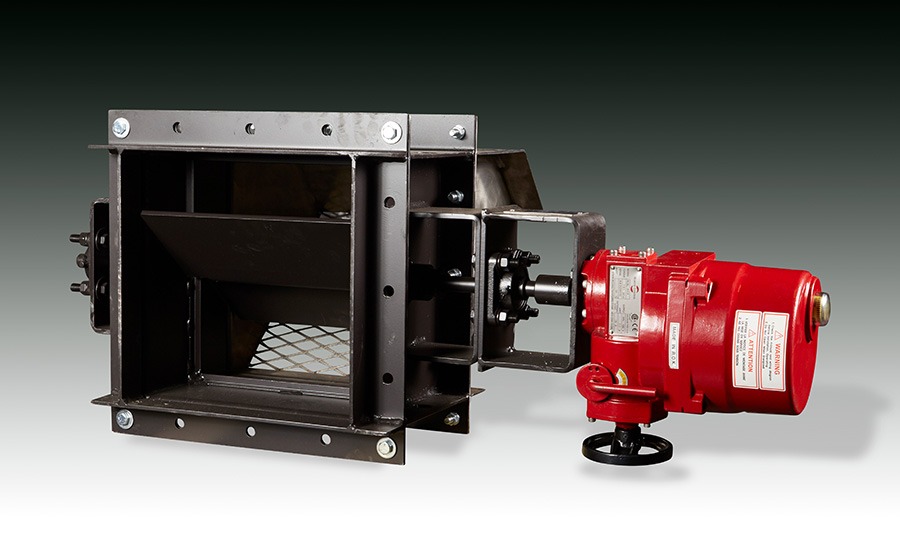
These dampers can be operated manually or through pneumatic, hydraulic, or electric actuators. The operating mechanism depends on the size of the damper, required closing force, automation needs, and process conditions. Certain applications require tight shutoff to minimize gas leakage, while others prioritize dependable mechanical separation under demanding temperatures and pressures.
Isolation dampers are particularly useful when equipment needs to be taken offline without unnecessarily interrupting the entire plant. Properly designed units support safer maintenance procedures, improve process flexibility, and help operators control the movement of gases between connected systems.
Importance of Choosing the Right Manufacturer
Manufacturing quality directly influences an isolation damper's reliability, sealing performance, and ability to withstand challenging industrial environments. A suitable manufacturer evaluates the application before recommending a particular design. Important considerations include operating temperature, pressure differential, gas composition, duct dimensions, required leakage limits, and the frequency of operation.
An experienced Isolation Damper Manufacturer can provide customized designs for different industries rather than relying entirely on standard dimensions. This flexibility is valuable when existing ductwork has unusual geometries or when equipment must operate under high-temperature, corrosive, or dusty conditions. Engineering support also helps customers select appropriate materials, bearings, seals, frames, and actuator arrangements.
Manufacturing quality assurance is equally important. Dimensional inspections, material verification, functional testing, and leakage testing where specified can help identify problems before equipment reaches the installation site. Buyers should also consider documentation, spare-parts availability, maintenance guidance, and technical support. A dependable supplier offers more than a finished product; it provides engineering assistance that supports long-term operational performance.
Types of Industrial Isolation Dampers
Different industrial processes require different damper configurations. The appropriate design depends on the available installation space, required isolation level, flow characteristics, and environmental conditions. Understanding common designs helps engineers compare available options and determine which solution best matches their operating requirements.
1. Guillotine Isolation Dampers
Guillotine dampers use a sliding blade that moves across the airflow passage to open or close the duct. When closed, the blade creates a physical barrier between connected sections of a system. Depending on the design, sealing arrangements can be incorporated to achieve the required degree of isolation.
These dampers are widely considered for large industrial ducts, flue gas systems, dust collection equipment, and process lines where space and installation arrangements permit linear blade movement. They can be engineered for demanding temperatures and pressure conditions, although performance depends on the construction, sealing system, and specified operating limits.
2. Butterfly Isolation Dampers
Butterfly dampers operate through a rotating disc positioned inside a frame. The disc turns to allow or restrict the movement of gases through the duct. Their compact construction and relatively simple operating mechanism make them useful where installation space is limited.
These dampers can be automated with electric or pneumatic actuators. They are often used in industrial ventilation, exhaust handling, and air distribution systems. However, the disc remains inside the flow passage, and the achievable shutoff performance depends on the seat design, clearances, and operating conditions.
3. Louver Isolation Dampers
Louver dampers contain multiple blades that rotate together to control the opening of an airflow passage. They can provide practical isolation in ventilation systems and large air handling installations. Blade arrangements, frame construction, and sealing features vary according to the intended application.
While some louver designs are suitable for basic shutoff, others are developed for more demanding isolation requirements. Buyers should verify the specified leakage performance rather than assuming that every louver damper provides a gas-tight seal.
4. Double-Louver or Double-Blade Isolation Dampers
Certain demanding applications use double-blade configurations or specialized arrangements that improve isolation performance. Some designs incorporate a space between two blades, which can be adapted for purge air or sealing systems. These configurations may be suitable for processes where limiting the transfer of hazardous or high-temperature gases is particularly important.
The actual level of isolation depends on the complete design, sealing method, and operating conditions. Engineering assessment is necessary before selecting such a system for critical applications.
Materials Used in Isolation Damper Manufacturing
Material selection determines how well a damper withstands temperature variations, corrosion, mechanical loading, and continuous industrial operation. Manufacturers generally select materials according to the gas composition, expected service life, structural requirements, and maintenance conditions.
Carbon steel is commonly used for general industrial applications because it offers strength and practical fabrication characteristics. Stainless steel may be selected when corrosion resistance or improved performance in specific environments is necessary. For high-temperature service, suitable heat-resistant alloys may be required, depending on the temperature and exposure conditions.
Damper seals also require careful consideration. Metallic seals can be appropriate for certain high-temperature applications, while specialized non-metallic sealing materials may be used within their specified temperature and chemical compatibility limits. Bearings, shafts, fasteners, and actuator components must likewise be suitable for the environment in which they operate.
A qualified Isolation Damper Manufacturer should assess the complete operating environment before finalizing materials. Selecting materials based only on purchase price may increase the likelihood of premature wear, leakage, or unplanned maintenance. A balanced selection considers initial cost, expected durability, availability of replacement components, and the consequences of equipment failure.
Major Industrial Applications of Isolation Dampers
Isolation dampers are used across industries where controlled separation of air or gases is necessary. Their configuration and performance requirements differ according to the process, equipment arrangement, and safety considerations.
Power Generation Plants
Power plants use isolation dampers in flue gas ducts, combustion air systems, exhaust arrangements, and pollution-control equipment. These installations may experience high temperatures, particulate matter, and pressure variations. Correctly specified dampers help separate equipment during servicing and support safe plant operations.
Cement and Steel Industries
Cement manufacturing and steel production involve large quantities of hot gases, dust, and process exhaust. Isolation dampers can be installed in kiln systems, dust collection networks, gas ducts, and industrial ventilation equipment. Heavy-duty construction is often necessary to accommodate abrasive particles and thermal expansion.
Chemical and Petrochemical Plants
Chemical facilities may require isolation between process sections carrying corrosive, hot, or potentially hazardous gases. Material compatibility, sealing performance, and the consequences of leakage must be carefully assessed. Damper selection should follow the plant's process engineering and safety requirements.
HVAC and Industrial Ventilation
Large commercial and industrial facilities use isolation dampers to separate ventilation zones, air handling equipment, and duct sections. Depending on the design, they can simplify maintenance and prevent unwanted airflow between connected areas.
Waste Incineration and Environmental Systems
Incinerators and emissions-control systems handle hot exhaust gases that may contain particulates and chemically aggressive components. Properly selected isolation dampers help separate filters, scrubbers, and related process equipment when maintenance or inspection is required.
Key Features of a High-Quality Isolation Damper
An effective industrial damper should match the actual demands of its application. Buyers should evaluate the following features before placing an order:
Reliable sealing: The sealing arrangement should meet the specified leakage limits under defined operating conditions.
Robust construction: Frames, blades, shafts, and supporting components should withstand expected mechanical loads.
Temperature compatibility: Materials and seals must suit normal and peak operating temperatures.
Suitable actuation: Manual, electric, pneumatic, or hydraulic operation should match process requirements.
Corrosion resistance: Wetted or gas-exposed components should tolerate the chemical environment.
Maintenance accessibility: Bearings, seals, actuators, and other serviceable parts should be accessible where practical.
Automation compatibility: Position switches, control interfaces, and feedback systems may be required for automated plants.
Quality documentation: Inspection reports, material records, and test documentation should be provided when required by the project.
These features contribute to dependable operation, but no single design is suitable for every application. The final specification should reflect the plant's technical and safety requirements.
Manufacturing Process of Isolation Dampers
Producing a reliable isolation damper requires coordinated engineering, fabrication, assembly, and quality control. The process typically begins with collecting application details, including duct size, operating pressure, temperature, gas composition, leakage requirements, and actuation preferences. Engineers then prepare the design and select suitable materials, sealing arrangements, and structural components.
Fabrication may involve cutting, machining, forming, welding, and finishing. Frames and blades must be manufactured to appropriate dimensional tolerances to support correct alignment and movement. Shaft positioning, bearing installation, and actuator connections are also important because misalignment can cause excessive operating torque, uneven sealing, or premature wear.
After fabrication, the damper is assembled and inspected. Depending on the design and purchase specification, testing may include dimensional checks, movement and functional checks, actuator operation, and leakage testing. Specialized high-temperature or high-pressure applications may require additional verification procedures.
How to Select the Best Isolation Damper
Choosing an industrial damper requires more than comparing prices or selecting a product based on its dimensions. Buyers should first identify the purpose of the damper and the performance level required in service. A unit intended for routine ventilation isolation may have different requirements from one installed in a high-temperature flue gas system or a process carrying hazardous gases.
The following factors should be considered when evaluating suppliers:
Application experience: Look for experience with similar industrial processes and operating conditions.
Engineering capabilities: Confirm that the supplier can provide drawings, dimensional details, and application-specific recommendations.
Material selection: Ensure that construction materials and sealing components are compatible with the process environment.
Leakage requirements: Clearly define acceptable leakage and request appropriate test information.
Actuator selection: Verify operating torque, power supply, control requirements, and fail-safe needs where applicable.
Delivery and support: Check manufacturing lead times, installation assistance, spare parts, and after-sales service.
Quality assurance: Review the inspection and testing procedures specified for the equipment.
Comparing suppliers against these criteria helps businesses identify a solution that balances cost, reliability, maintenance requirements, and operational safety.
Benefits of Custom-Designed Isolation Dampers
Standard dampers can satisfy many routine requirements, but industrial facilities sometimes need customized equipment to fit unusual duct dimensions or challenging operating conditions. Custom engineering allows the frame geometry, blade arrangement, shaft configuration, sealing system, and actuator mounting to be adapted to the installation.
One major advantage is improved compatibility with existing infrastructure. A correctly designed damper can reduce unnecessary modifications to ductwork and help simplify installation. Custom material selection can also improve resistance to corrosion, abrasion, and temperature-related stresses when the chosen materials are appropriate for the service.
Automation can be incorporated where remote operation or integration with a plant control system is required. Position feedback and interlocking arrangements may help operators confirm damper status and coordinate equipment operation. These functions must be designed and implemented according to the application's control and safety requirements.
Working with an experienced Isolation Damper Manufacturer allows buyers to discuss operating limitations before production begins. Clear communication of technical requirements reduces specification gaps and helps ensure that the finished equipment is suitable for the intended installation.
Maintenance and Troubleshooting
Regular maintenance helps preserve damper movement, sealing performance, and operating reliability. The recommended inspection frequency depends on service conditions, operating cycles, manufacturer guidance, and the consequences of failure. Systems exposed to dust, corrosive gases, or high temperatures may require more frequent inspection than equipment operating under mild conditions.
Maintenance personnel should inspect accessible components for corrosion, deposits, mechanical damage, loose connections, and signs of leakage. Actuators and position indicators should be checked according to the relevant maintenance procedures. Bearings and moving components should receive lubrication only where specified by the manufacturer.
Common operational problems include incomplete closure, excessive operating torque, actuator malfunction, and leakage around the blade or frame. Potential causes include accumulated debris, misalignment, damaged seals, incorrect actuator settings, or component wear. Troubleshooting should identify the underlying cause rather than relying on repeated adjustments that may conceal a larger problem.
Before maintenance begins, the connected system must be isolated and placed in a safe condition according to site procedures. Hazardous gases, stored pressure, high temperatures, and unexpected actuator movement must be considered. Appropriate inspection and timely replacement of worn components can reduce downtime and extend the useful service life of the equipment.
Cost Factors Affecting Isolation Damper Selection
The price of an isolation damper depends on several technical and commercial factors. Overall dimensions, material grade, operating temperature, pressure conditions, leakage requirements, and fabrication complexity can all influence manufacturing costs. A large heavy-duty damper for a power plant will generally have different design and production requirements from a compact unit used in a standard ventilation system.
Actuation also affects the total cost. Manual operation may be adequate for infrequently operated equipment, whereas electric or pneumatic actuators can be necessary for automated installations. Additional requirements, such as position feedback, special coatings, inspection documentation, or customized mounting arrangements, may increase the initial investment.
However, the purchase price should not be the only factor in the decision. Buyers should consider installation expenses, energy losses caused by leakage, routine maintenance, replacement-part availability, and the operational consequences of failure. A damper that meets the specified performance requirements and is easier to maintain may offer better long-term value than a cheaper product that requires frequent repairs.
Future Trends in Isolation Damper Technology
Industrial equipment is increasingly being designed to support automation, improved monitoring, and more efficient maintenance planning. Isolation dampers can form part of these developments through electric actuation, position feedback, remote control, and integration with industrial control systems.
Digital monitoring can help operators identify whether a damper has reached its commanded position. When combined with suitable control logic and maintenance practices, this information may assist in identifying abnormal operating conditions before they cause significant disruption. More advanced monitoring arrangements can also support condition-based maintenance where the application justifies the investment.
Material development and improved sealing designs continue to offer opportunities for better durability and more consistent performance. Nevertheless, technology selection must remain application-specific. Electronic monitoring cannot compensate for unsuitable materials, inadequate mechanical design, or an incorrect leakage specification.
Conclusion
Isolation dampers are essential components in industrial systems that require controlled airflow, equipment separation, and dependable maintenance access. Their effectiveness depends on the correct design, appropriate material selection, reliable sealing, and compatibility with the operating environment. From power generation and cement production to chemical processing and industrial ventilation, these devices support safe and efficient management of air and gases.
Choosing an experienced Isolation Damper Manufacturer helps businesses obtain equipment designed around their specific dimensions, operating conditions, and performance requirements. Buyers should evaluate engineering expertise, manufacturing quality, testing procedures, automation options, and after-sales support before making a final decision. By combining proper selection with regular maintenance, industrial facilities can improve equipment reliability, minimize unplanned downtime, and achieve better long-term operational value.
Related Posts
- Sep 30, 2026
- SUDE
- 10