

High Temperature Dampers for Reliable Industrial Heat Control
- Damper
- Oct 07, 2026
- 6 Views
High Temperature Dampers for Reliable Industrial Heat Control
Industrial processes that operate under extreme heat require components capable of maintaining performance when ordinary equipment may fail. Airflow, combustion gases, exhaust streams, and process gases must often be regulated accurately while temperatures remain extremely high. Dampers play an important role in these systems by controlling, directing, isolating, or shutting off the movement of gases and air. When standard dampers are exposed to excessive temperatures, they can experience deformation, seal failure, corrosion, actuator problems, and reduced operating life. This is why specialized High Temperature Dampers are designed with suitable materials, construction methods, clearances, and operating mechanisms for demanding environments.
These dampers are commonly used in industries such as power generation, steel manufacturing, cement production, chemical processing, waste-to-energy, glass manufacturing, and industrial heating. Their design depends on operating temperature, gas composition, pressure, flow requirements, installation conditions, and the desired level of isolation. Selecting the right damper can improve process control while reducing maintenance requirements and unexpected shutdowns.
What Are High Temperature Dampers?
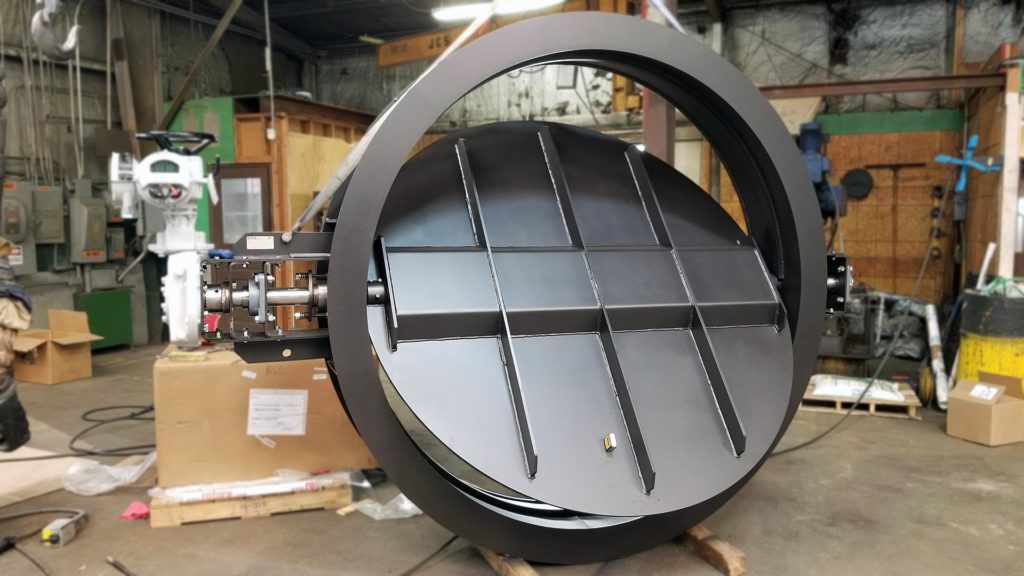
High Temperature Dampers are industrial flow-control devices engineered to regulate or isolate hot air, combustion gases, flue gases, and other high-temperature process streams. Unlike conventional dampers, they are designed to tolerate elevated operating temperatures without losing their structural strength or functional accuracy. Depending on the application, they may be manufactured using heat-resistant steels, stainless steels, refractory-lined components, specialized alloys, or combinations of materials.
The damper blade, shaft, frame, bearings, seals, and actuator all need to work together under demanding conditions. Thermal expansion is particularly important because metal components can expand considerably when exposed to high temperatures. Engineers therefore incorporate appropriate clearances and structural arrangements to prevent binding or excessive stress.
Some dampers are designed primarily for throttling and flow regulation, while others are intended for isolation and emergency shutoff. The correct design depends on whether the system requires continuous modulation, open-close operation, tight isolation, or a combination of functions.
Why Temperature Resistance Matters
Temperature can have a major impact on the performance and lifespan of industrial flow-control equipment. As temperatures increase, materials may lose strength, seals can deteriorate, lubricants may degrade, and moving components can become difficult to operate. Repeated heating and cooling cycles can also create thermal stresses that eventually cause fatigue or distortion.
A damper installed in a hot gas duct must therefore be designed around the actual operating environment rather than simply its nominal temperature rating. Maximum temperature, normal temperature, temperature fluctuations, gas velocity, pressure, and exposure duration all influence the design.
A properly engineered damper helps maintain predictable airflow and gas movement even during demanding operating conditions. It can also protect downstream equipment by controlling the amount of hot gas reaching heat-sensitive components. For facilities where production depends on stable process temperatures, reliable damper operation can contribute significantly to overall plant performance.
Key Design Features
The construction of a high-temperature damper involves several important engineering considerations. Material selection is one of the first decisions because every component must remain suitable for the expected operating environment.
Common design considerations include:
Heat-resistant construction materials
Reinforced frames and blades
Suitable thermal expansion clearances
High-temperature shaft arrangements
Heat-resistant bearings or bearing protection
Appropriate sealing systems
Insulated or refractory-lined construction where required
Heavy-duty actuator compatibility
Corrosion-resistant surfaces
Suitable manual or automated operation
Blade geometry is also important. A blade that is adequate for a moderate-temperature application may not be appropriate for an extreme-temperature installation. The design must account for thermal distortion while maintaining the required flow-control characteristics.
The shaft and actuator connection require particular attention because excessive heat transfer can affect the actuator. In many installations, thermal protection or extended shaft arrangements are used to keep sensitive components away from the hottest section of the duct.
Materials Used in High-Temperature Damper Construction
Material selection directly affects the reliability of High Temperature Dampers. Different industrial environments require different material combinations. Carbon steel may be suitable for certain moderately hot applications, while stainless steel or specialized heat-resistant alloys may be required at higher temperatures or in corrosive gas streams.
Refractory materials may also be incorporated when extremely hot gases are involved. A refractory lining can provide thermal protection and reduce heat transfer to structural components. However, refractory construction must be designed carefully because thermal cycling can cause cracking or deterioration over time.
The selection process should consider temperature, oxidation, chemical exposure, abrasion, gas velocity, pressure, and expected service life. Using an unnecessarily expensive alloy is not always the best solution, just as using an unsuitable low-cost material can create frequent maintenance problems.
Component | Common Material Considerations | Main Purpose |
|---|---|---|
Damper Blade | Carbon steel, stainless steel, heat-resistant alloys | Controls gas flow |
Frame | Carbon or stainless steel | Provides structural support |
Shaft | Alloy or stainless steel | Transfers actuator movement |
Seals | High-temperature sealing materials | Limits unwanted leakage |
Lining | Refractory materials | Provides thermal protection |
Bearings | Heat-resistant/protected designs | Supports shaft movement |
Actuator | Industrial-duty construction | Opens, closes, or modulates damper |
Applications Across Different Industries
High Temperature Dampers are used in many industrial processes where hot gases need to be controlled. In power plants, they can regulate combustion air, exhaust gases, and flue gas pathways. Cement plants use dampers in kiln and preheater systems, where gas temperatures and dust levels can be demanding.
Steel manufacturing facilities may use specialized dampers around furnaces, heat-treatment systems, and exhaust networks. In chemical processing, dampers can control hot process gases while maintaining required operating conditions. Waste-to-energy facilities may also require robust dampers for combustion and flue gas systems.
Other applications include:
Industrial furnaces
Kilns and dryers
Incinerators
Heat recovery systems
Boiler systems
Thermal oxidizers
Exhaust systems
Combustion-air systems
Hot gas ducts
Process ventilation systems
The damper configuration should always be selected according to the specific process conditions rather than based solely on application type.
Types of High-Temperature Dampers
Different processes require different damper configurations. Butterfly-style dampers are often selected where compact construction and rotary operation are desirable. Guillotine dampers can provide strong isolation in applications where full flow separation is important. Louver dampers may be suitable for air and gas regulation, particularly in ventilation and combustion systems.
Slide and diverter designs can be used when the process requires switching flow between different pathways. Multi-blade configurations may provide improved control across larger duct sizes.
Each design has different advantages. A butterfly configuration can offer relatively simple operation, while a guillotine arrangement can be beneficial for isolation. The best selection depends on duct dimensions, pressure, temperature, leakage requirements, operating frequency, and available installation space.
Actuation and Automation
Modern industrial systems increasingly use automated actuators to operate dampers. Electric actuators are useful where accurate positioning, remote operation, and integration with plant control systems are required. Pneumatic actuators may be preferred in facilities where compressed air is readily available or where rapid movement is important.
An actuator must be selected according to the torque requirement of the damper. High-temperature conditions can increase mechanical resistance because of thermal expansion, deposits, and other process effects. The actuator should therefore have sufficient operating capacity without being unnecessarily oversized.
Position feedback can also be incorporated into automated systems. This allows operators or control systems to confirm whether the damper is fully open, fully closed, or positioned at an intermediate point. In critical processes, feedback can help improve operational monitoring and safety.
Managing Thermal Expansion
Thermal expansion is one of the most important engineering challenges in hot gas applications. Metal components expand as their temperature rises, and different materials may expand at different rates. If a damper does not provide adequate movement allowance, the blade or shaft can become distorted or jammed.
Engineers account for this by calculating expected dimensional changes and providing suitable clearances. Shaft arrangements, blade construction, frame design, and bearing locations may all require special consideration.
Thermal expansion should also be evaluated during startup and shutdown because these periods can produce rapid temperature changes. Repeated thermal cycling can be more damaging than stable high-temperature operation in some applications. A carefully engineered design helps reduce mechanical stress and supports consistent operation throughout the equipment's service life.
Sealing and Leakage Control
Leakage requirements vary significantly between industrial processes. Some applications simply need basic airflow regulation, while others require strong isolation between hot and cold sections of a system. Seals must therefore be selected according to temperature, pressure, gas composition, and required leakage performance.
At elevated temperatures, conventional sealing materials may harden, deteriorate, or lose their effectiveness. High-temperature sealing solutions are designed to maintain their properties for longer periods under demanding conditions.
In addition to reducing unwanted gas movement, effective sealing can improve energy efficiency. Preventing uncontrolled hot-gas leakage can reduce heat losses and help maintain desired process conditions. However, the sealing arrangement should also accommodate thermal movement so that it does not restrict damper operation.
Benefits of High Temperature Dampers
Well-designed High Temperature Dampers can provide several operational benefits for industrial facilities. Their primary function is dependable control of hot air and gases, but their contribution can extend to process efficiency, safety, and equipment protection.
Important benefits include:
Reliable operation at elevated temperatures
Improved airflow and gas-flow control
Better process stability
Reduced unwanted leakage
Protection of downstream equipment
Compatibility with automated control systems
Reduced maintenance when correctly designed
Improved operational flexibility
Long-term durability
Better isolation during maintenance
The actual benefits depend on proper sizing, material selection, installation, and maintenance. A technically suitable damper can perform poorly if it is incorrectly sized or exposed to conditions outside its design range.
Selection Factors to Consider
Choosing High Temperature Dampers requires a detailed assessment of operating conditions. Temperature is important, but it is only one part of the selection process. Engineers should also consider pressure, gas composition, flow rate, duct size, installation orientation, leakage requirements, and operating frequency.
Before selecting a damper, consider:
Normal and maximum operating temperature
Gas composition and corrosive elements
Duct dimensions
Operating pressure
Required flow capacity
Isolation or modulation requirements
Frequency of operation
Actuator type and available power
Leakage requirements
Maintenance accessibility
Providing accurate process information to the manufacturer can help ensure that the final configuration is appropriate for the application.
Maintenance Requirements
Even robust industrial dampers require regular inspection. High-temperature environments can accelerate wear, oxidation, corrosion, and accumulation of deposits. Operators should periodically inspect blades, shafts, seals, bearings, actuator connections, and structural components.
Maintenance intervals should be established according to operating severity. Critical applications may require more frequent inspection than systems that operate intermittently.
During maintenance, operators should check for unusual vibration, increased actuator torque, abnormal noise, visible deformation, excessive leakage, and signs of material deterioration. Early identification of these issues can prevent larger failures and reduce unplanned downtime.
Improving Efficiency and Plant Reliability
Efficient gas management can have a direct influence on industrial energy consumption. When dampers regulate airflow correctly, combustion systems can maintain appropriate air-to-fuel conditions, exhaust systems can operate more effectively, and unwanted heat losses can be minimized.
A reliable damper also supports plant availability. Unexpected failures in hot gas systems can force operators to reduce production or shut down equipment for inspection. Selecting equipment designed specifically for the process conditions can reduce the likelihood of such interruptions.
Conclusion
High Temperature Dampers are essential components for industrial systems that need dependable control of hot air, flue gases, combustion gases, and other high-temperature process streams. Their performance depends on careful engineering across materials, blade construction, thermal expansion, sealing, actuation, and maintenance.
The right damper can improve process control, reduce leakage, protect equipment, and support reliable plant operation. However, successful selection requires a clear understanding of temperature, pressure, gas composition, flow conditions, and operating requirements. By choosing a damper specifically engineered for the application's environment and maintaining it correctly, industrial facilities can achieve dependable performance even under challenging thermal conditions.
Related Posts
- Sep 30, 2026
- SUDE
- 10
Industrial Butterfly Dampers: Efficient Flow Control for Industries
Explore More
- Sep 18, 2026
- SUDE
- 10