
Valve Automation Solutions for Modern Industrial Applications
- Valve
- Oct 26, 2026
- 5 Views
Valve Automation Solutions for Modern Industrial Applications
Industrial processes depend on accurate flow control, reliable equipment, and consistent operational performance. Valves play an essential role in regulating the movement of liquids, gases, steam, and other process media across industries. However, manually operated valves can require significant labor, take longer to operate, and create challenges when precise control is necessary. Automation offers an effective way to address these limitations while improving productivity and operational consistency.
Valve Automation Solutions combine valves with actuators, control systems, sensors, and supporting components to manage fluid flow with greater accuracy and efficiency. These systems can operate automatically according to programmed instructions, process conditions, or signals from a central control room. From water treatment facilities and chemical plants to power stations and manufacturing units, automated valves support safer and more dependable operations. Understanding their components, applications, benefits, and selection criteria helps industrial businesses choose equipment that meets their operational requirements and long-term performance goals.
What Are Valve Automation Solutions?
Valve automation refers to the process of equipping a valve with an actuator and associated control components so it can open, close, or adjust its position without requiring direct manual operation. Depending on the application, the system may provide simple on-off functionality or continuously regulate flow to maintain a specified pressure, temperature, or flow rate.
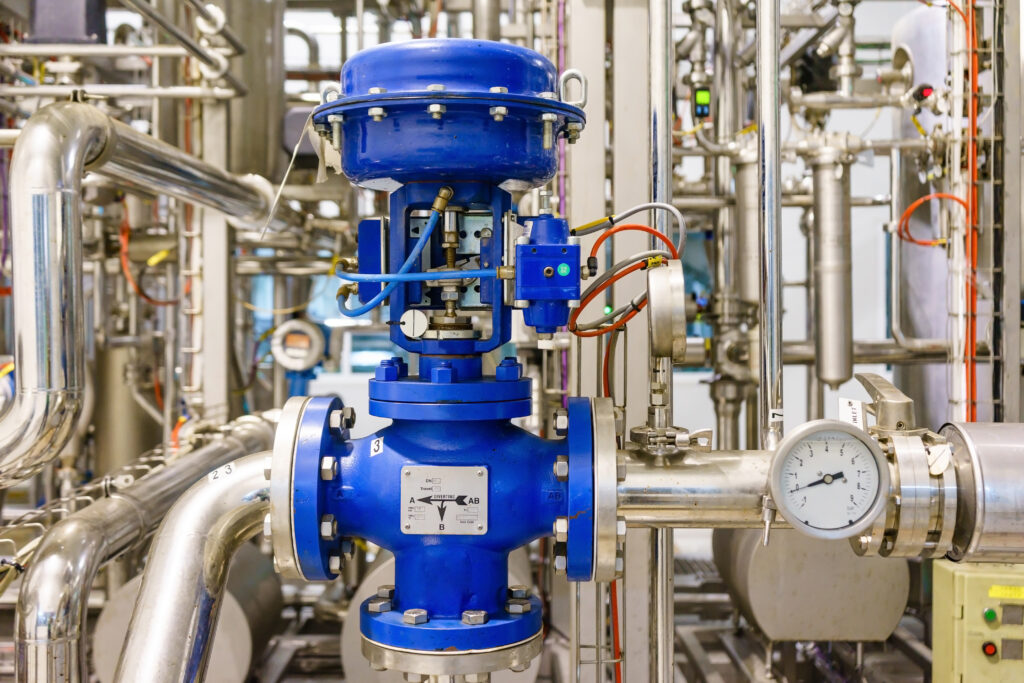
A typical automated valve assembly includes the valve body, an actuator, mounting accessories, and an appropriate control interface. Additional components, such as positioners, limit switches, solenoid valves, and position feedback devices, may be incorporated according to system requirements. These components work together to translate a control signal into mechanical movement.
For example, a water treatment plant may automatically open a valve when a storage tank reaches a particular operating condition. Similarly, a manufacturing facility may adjust a control valve to maintain the required flow rate during production. This reduces dependence on manual intervention and helps operators manage complex processes more consistently. The precise configuration depends on the type of media, operating pressure, temperature, required response time, and applicable safety standards.
Key Components of an Automated Valve System
An automated valve system consists of several interconnected components, each performing a specific function. Selecting compatible equipment is essential because the performance of the complete assembly depends on how effectively these parts work together.
1. Industrial Valve
The valve controls the movement of process media through a pipeline. Common types include ball valves, butterfly valves, gate valves, globe valves, and diaphragm valves. Each design serves different purposes based on pressure requirements, flow characteristics, sealing performance, and the nature of the application.
2. Actuator
The actuator converts an electrical, pneumatic, or hydraulic input into the movement required to operate the valve. Electric actuators are often selected when electrical control and accurate positioning are important. Pneumatic actuators are widely used where compressed air is available and rapid operation is required, while hydraulic actuators can deliver high operating forces for demanding applications.
3. Control System
The control system sends commands to the actuator based on operator instructions, programmed logic, or information received from field instruments. Programmable logic controllers and distributed control systems can coordinate multiple automated valves across an industrial facility.
4. Sensors and Feedback Devices
Sensors measure operating conditions such as pressure, temperature, or flow. Position feedback devices help confirm whether a valve has reached the commanded position, supporting monitoring, troubleshooting, and process control.
5. Mounting and Communication Accessories
Mounting brackets, couplings, wiring, pneumatic tubing, and communication interfaces connect the valve assembly with the broader system. Proper installation and compatibility help maintain dependable operation.
Types of Valve Automation Systems
Different industries require different automation technologies. The right choice depends on the available utilities, required torque, control accuracy, operating environment, and maintenance capabilities.
Electric Valve Automation
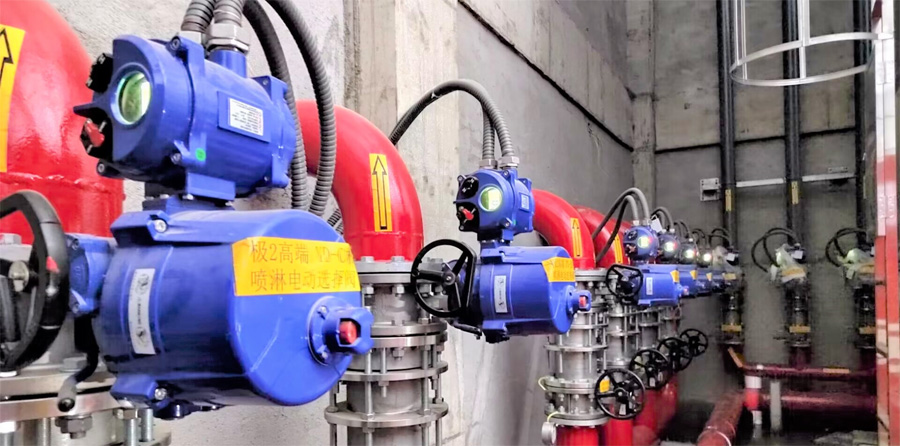
Electric automation uses an electric motor and a gearbox or other drive mechanism to operate the valve. It is suitable for applications where electrical power is available and operators need remote control, repeatable positioning, or integration with digital control systems. Electric actuators are commonly used in water distribution, HVAC systems, power generation, and general industrial processing.
Depending on the model, an electric actuator can provide quarter-turn or multi-turn operation. Quarter-turn models are commonly paired with ball and butterfly valves, whereas multi-turn actuators are often used with gate and globe valves. Modulating models can adjust valve position in response to control signals, provided they are designed for that duty. Environmental protection, duty cycle, operating torque, and power supply must be considered before selecting an actuator.
Pneumatic Valve Automation
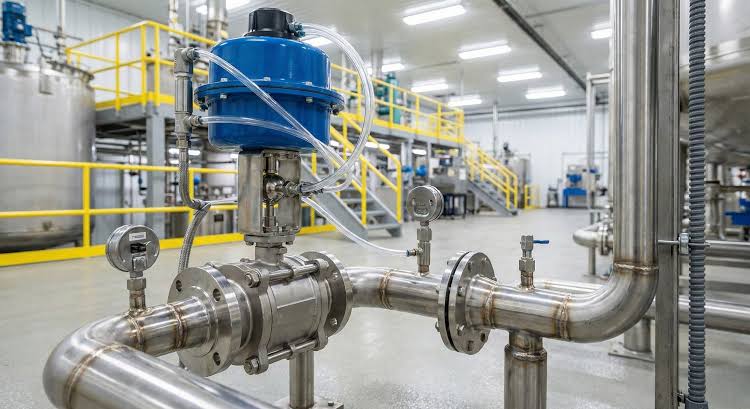
Pneumatic automation uses compressed air to generate the force needed to operate a valve. These systems are widely used in chemical processing, packaging, manufacturing, and other facilities with an established compressed-air supply. Pneumatic actuators can deliver fast operation and are available in configurations suitable for both quarter-turn and linear-motion valves.
A pneumatic system may use a solenoid valve to direct air into the actuator, while limit switches provide position feedback. Spring-return designs can move the valve toward a predetermined position when the air supply fails, depending on the actuator configuration and installation. However, the required air pressure, air quality, actuator sizing, and availability of backup utilities should be assessed carefully. These considerations are particularly important when the valve performs an essential safety or isolation function.
Hydraulic Valve Automation
Hydraulic automation uses pressurized fluid to generate substantial operating force. It is useful for large valves, high-pressure systems, and applications where significant torque or thrust is required. Industries such as oil and gas, heavy manufacturing, power generation, and specialized process facilities may use hydraulic actuators for demanding operating conditions.
Hydraulic systems can provide powerful and controlled movement, but they also require suitable hydraulic power units, fluid management, seals, and maintenance procedures. Potential leakage, fluid contamination, and temperature variations must be addressed during system design. The complete assembly should be selected according to the required operating force, response time, duty cycle, environmental conditions, and applicable safety requirements.
Major Benefits of Valve Automation
Automation can improve the performance of industrial processes by reducing unnecessary manual tasks and helping operators maintain consistent control. When properly designed and maintained, automated valve assemblies can support productivity, reliability, and workplace safety.
Improved Operational Efficiency
Automated valves can respond to control commands without requiring an operator to travel to each valve location. This is particularly valuable in large facilities containing extensive pipeline networks or equipment installed in difficult-to-access areas. Faster and more consistent operation can help reduce process delays and support smoother production schedules.
Greater Control Accuracy
Positioning and feedback capabilities allow compatible automated valves to regulate flow or maintain specified operating conditions. This is beneficial in applications where small process variations can affect product quality, energy consumption, or equipment performance. Accurate control depends on the valve characteristics, actuator capability, instrumentation, and control strategy working together.
Enhanced Workplace Safety
Remote operation can reduce the need for employees to approach hot pipelines, hazardous fluids, high-pressure equipment, or restricted industrial areas. Automated isolation valves can also be integrated into suitable safety systems when designed and validated for the intended function. However, automation does not eliminate all risks; appropriate safeguards, emergency procedures, and functional testing remain essential.
Reduced Manual Workload
Automated systems reduce repetitive valve operation and allow maintenance teams and operators to concentrate on inspection, process improvement, and other important tasks. This can be especially helpful in facilities where numerous valves must operate according to a regular schedule.
Better Monitoring and Maintenance Planning
Position feedback, actuator diagnostics, operating data, and fault alerts can help maintenance teams identify developing problems. Depending on the equipment, these features may reveal excessive operating time, repeated movement failures, or unusual operating conditions before they lead to major disruption.
Industrial Applications of Valve Automation
Automated valves are used in a wide range of industries because fluid movement is central to many manufacturing and infrastructure processes. Their configuration varies according to the media being handled, the required control function, and the operating environment.
Water and Wastewater Treatment
Water treatment facilities use automated valves to manage filtration, chemical dosing, storage tanks, pumping systems, and distribution networks. Automated isolation and flow-control functions help coordinate different treatment stages and maintain consistent operating conditions. Equipment must be compatible with the water chemistry, pressure, and environmental exposure found at the installation site.
Oil and Gas Industry
Oil and gas facilities require dependable flow control across production, transportation, storage, and processing operations. Automated valves can support remote isolation, process regulation, and equipment sequencing. Applications involving flammable media, high pressure, or hazardous locations require careful selection of certified equipment and appropriately engineered safety systems.
Chemical and Pharmaceutical Manufacturing
Chemical plants use automated valves to control the movement and mixing of process ingredients, manage reactor conditions, and isolate equipment during maintenance. Pharmaceutical production may require specialized materials, hygienic designs, or validated cleaning procedures. Compatibility with the process medium and applicable industry requirements is essential.
Power Generation
Power plants use valves to manage water, steam, cooling circuits, fuel systems, and auxiliary processes. Automated operation can support coordinated equipment control and reduce the need for manual adjustments. High-temperature and high-pressure applications require valves and actuators designed for the relevant operating conditions.
Food and Beverage Processing
Food and beverage facilities use automated valves in liquid transfer, mixing, cleaning, and production systems. Hygienic construction, material compatibility, cleanability, and resistance to the cleaning chemicals used at the site are important selection considerations. Proper automation can help maintain repeatable process sequences and efficient production.
HVAC and Building Services
Heating, ventilation, and air-conditioning systems use automated valves to regulate chilled water, hot water, and other fluids. Modulating valves can help balance thermal loads and maintain comfortable indoor conditions. Appropriate control settings and system balancing are necessary to achieve the intended energy and comfort benefits.
Comparison of Common Valve Actuator Types
The following table summarizes the main differences between electric, pneumatic, and hydraulic actuation technologies.
Feature | Electric Actuator | Pneumatic Actuator | Hydraulic Actuator |
|---|---|---|---|
Power source | Electricity | Compressed air | Pressurized hydraulic fluid |
Typical strength | Control and positioning flexibility | Fast, simple operation | High force and torque |
Utility requirement | Suitable electrical supply | Reliable air supply | Hydraulic power system |
Common applications | Water, HVAC, general process control | Manufacturing and process plants | Heavy-duty industrial systems |
Maintenance focus | Motor, gearbox, electrical components | Air quality, seals, tubing | Fluid condition, seals, hydraulic components |
Position control | Available in suitable models | Available with appropriate accessories | Available in suitable configurations |
Main consideration | Electrical and environmental suitability | Air availability and consumption | System complexity and fluid management |
The table provides general guidance rather than a universal ranking. Actual performance depends on actuator sizing, valve design, operating conditions, control requirements, and the manufacturer's specifications.
How to Select the Right Valve Automation System
Choosing the correct automated valve assembly requires a clear understanding of the process and the conditions under which the equipment will operate. A system that performs well in one application may not be appropriate for another, even when both use the same valve type. Careful evaluation helps prevent installation problems, unnecessary maintenance expenses, and unreliable operation.
Before purchasing equipment, engineering and maintenance teams should review the following factors.
Valve type and size: Confirm whether the application requires a ball, butterfly, gate, globe, or another valve design.
Operating torque or thrust: Ensure that the actuator can operate the valve under the expected pressure and differential-pressure conditions.
Process medium: Evaluate chemical compatibility, viscosity, cleanliness, and any corrosive or abrasive properties.
Operating temperature and pressure: Verify that all components meet the actual process requirements.
Control requirements: Determine whether simple open-close operation, intermediate positioning, or continuous modulation is necessary.
Power availability: Assess the reliability of electrical supplies, compressed air, or hydraulic utilities.
Environmental conditions: Consider moisture, dust, vibration, ambient temperature, and hazardous-area classification.
Communication and integration: Confirm compatibility with the existing PLC, DCS, communication protocol, and monitoring equipment.
Maintenance and spare parts: Review service access, component availability, inspection requirements, and expected lifecycle costs.
A detailed assessment of these factors makes it easier to specify equipment that delivers reliable performance throughout its intended service life.
The Role of Smart Technology in Valve Automation
Industrial automation continues to evolve as manufacturers adopt digital monitoring, connected equipment, and advanced control strategies. Modern actuators may include electronic position indicators, diagnostic functions, communication interfaces, and data logging capabilities. These features help operators understand equipment status without relying entirely on physical inspections.
In a connected facility, valve position and operating information can be integrated into a supervisory control system. Operators can identify whether a valve has reached its commanded position, investigate abnormal operating times, and respond to selected fault conditions. Some systems also support remote configuration and condition monitoring, subject to appropriate network access and cybersecurity controls.
Smart monitoring can contribute to predictive maintenance by identifying patterns that suggest developing mechanical or electrical problems. For example, repeated increases in operating time may indicate a need to investigate valve friction, actuator performance, or changing process conditions. However, diagnostic alerts should be interpreted alongside operating data and physical inspection rather than treated as definitive proof of a particular fault.
Implementing smart technology successfully requires more than installing connected actuators. Reliable instrumentation, suitable network architecture, secure access controls, trained personnel, and clear maintenance procedures are also necessary. With these elements in place, digital capabilities can improve equipment visibility and support better-informed maintenance decisions.
Installation and Maintenance Best Practices
Correct installation is essential for achieving the expected performance of an automated valve system. Before installation, technicians should verify the valve's pressure rating, actuator compatibility, mounting arrangement, electrical connections, and utility requirements. The valve and actuator must be aligned correctly to prevent unnecessary mechanical stress and excessive operating loads.
After installation, the assembly should undergo appropriate commissioning checks. These may include verifying open and closed positions, confirming control signals, testing feedback devices, checking for leakage, and ensuring that the actuator operates within its specified limits. Where a valve performs a safety-related function, the applicable functional testing and validation procedures must also be completed.
Routine maintenance helps preserve reliability and identify wear before it causes operational problems. The maintenance schedule should reflect manufacturer recommendations, process severity, operating frequency, and the consequences of failure.
Important maintenance activities include:
Inspecting actuator housings, mounting hardware, wiring, and connections.
Checking pneumatic lines or hydraulic components for leaks and damage.
Verifying valve travel, position indication, and limit-switch operation.
Reviewing alarms, diagnostic records, and unusual operating patterns.
Lubricating components where specified by the manufacturer.
Testing emergency operation and fail-safe functions according to approved procedures.
Recording inspections, repairs, and component replacements.
Maintenance work should be performed by qualified personnel using appropriate isolation and lockout procedures. Equipment should never be assumed safe merely because an automated command has been issued.
Common Challenges in Valve Automation
Although automation provides substantial operational advantages, certain challenges can affect system performance if they are not addressed during design and installation.
One common issue is incorrect actuator sizing. An undersized actuator may struggle to operate a valve under demanding conditions, while an oversized actuator can increase costs and potentially expose valve components to unnecessary loads. Accurate torque or thrust calculations, including appropriate engineering margins, help reduce these risks.
Another challenge is incompatibility between the actuator and the control system. Incorrect signal configuration, wiring errors, communication problems, or unsuitable feedback settings can prevent the valve from responding as expected. Commissioning procedures should verify every relevant command and feedback function.
Environmental exposure can also affect equipment reliability. Moisture, corrosion, vibration, dust, and extreme temperatures may damage components that are not appropriately protected. Selecting suitable enclosure ratings, materials, and installation arrangements is therefore important.
Finally, insufficient maintenance planning can result in unexpected failures and production interruptions. Establishing inspection schedules, maintaining critical spare parts, training operators, and documenting system configurations can help address these problems before they become costly disruptions.
Cost Considerations and Long-Term Value
The initial purchase price is only one part of the total cost of an automated valve installation. Businesses should also consider installation labor, control-system integration, electrical or pneumatic infrastructure, commissioning, maintenance, energy consumption, and future replacement requirements.
For example, an electric actuator may require a higher initial investment than a basic manual arrangement but could reduce the labor needed for frequent valve operation. A pneumatic system may provide rapid movement in a facility that already has a reliable compressed-air network, while a hydraulic arrangement may be justified where substantial operating force is essential. The most economical option depends on the application rather than on equipment price alone.
When evaluating Valve Automation Solutions, businesses should consider the potential value of improved process consistency, reduced manual intervention, more efficient maintenance, and fewer avoidable production interruptions. These benefits should be assessed against realistic operating data instead of assumed savings.
A lifecycle cost assessment can compare different technologies over the expected service period. It should account for maintenance frequency, utility consumption, spare-part availability, operating duty, and the financial impact of downtime. This approach supports better purchasing decisions and helps organizations select equipment that meets both technical and commercial objectives.
Future Trends in Industrial Valve Automation
The future of industrial valve control is closely connected to developments in digitalization, equipment diagnostics, and integrated process management. Manufacturers continue to improve actuator electronics, communication capabilities, and monitoring features to provide better visibility into equipment performance.
Greater use of industrial communication networks allows compatible valves to exchange status information with centralized control platforms. This can help operators manage distributed installations and respond more quickly to abnormal operating conditions. Meanwhile, improved diagnostic tools may support more targeted maintenance by highlighting equipment that needs attention.
Energy efficiency is another important consideration. Selecting an appropriately sized actuator, optimizing control sequences, and avoiding unnecessary valve movement can help reduce wasted energy and improve process performance. Digital monitoring may also help identify opportunities to refine operating procedures.
Cybersecurity and system resilience will remain important as industrial equipment becomes increasingly connected. Access permissions, secure network design, software maintenance, and clear recovery procedures should be included in automation planning. New technology delivers the greatest value when it is supported by sound engineering practices, trained staff, and a well-defined maintenance strategy.
Conclusion
Valve automation has become an important part of modern industrial operations, helping facilities manage fluid flow with greater consistency, efficiency, and control. By combining suitable valves, actuators, control equipment, and monitoring devices, businesses can reduce repetitive manual work, improve process visibility, and support safer operating practices.
Selecting the right technology requires careful consideration of valve design, operating conditions, actuation method, control requirements, installation environment, and long-term maintenance costs. Electric, pneumatic, and hydraulic systems each offer distinct advantages, making application-specific engineering essential.
Well-planned Valve Automation Solutions can support reliable production, better equipment monitoring, and improved lifecycle value across water treatment, manufacturing, energy, chemical processing, and many other industries. With appropriate equipment selection, professional installation, and regular maintenance, industrial facilities can build dependable automation systems that meet current operational demands while remaining adaptable to future technological developments.
Related Posts